


Yonatan Sompolinsky and the research question that became Kaspa
Kaspa's founder spent years asking what happens when honest proof-of-work miners find blocks at nearly the same time. The answer began in research papers, became GHOSTDAG, and now runs as a live network built by many contributors.
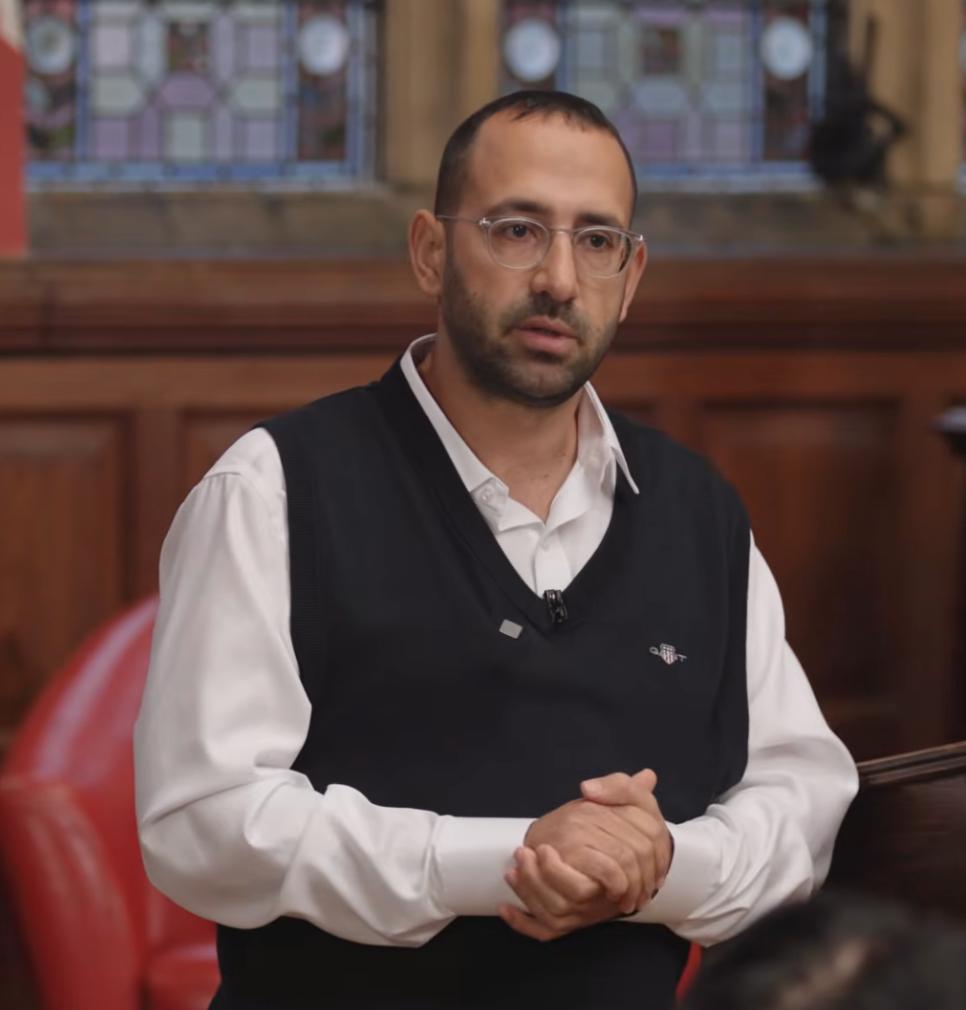
Bitcoin's proof-of-work security is built around a chain of blocks. When two miners find valid blocks close together, the network must resolve which branch becomes the chain's history. Yonatan Sompolinsky made that collision a research problem: could a network produce blocks more frequently without treating every near-simultaneous discovery as wasted work?
Sompolinsky and Aviv Zohar explored that question in their GHOST research. Their proposal examined how a different rule for choosing a branch might improve security at higher block rates. GHOST was an early step, not the protocol Kaspa runs today.
From a chain to a graph
The next step was to keep track of parallel blocks rather than simply choose one branch and forget the rest. In the PHANTOM and GHOSTDAG paper, Sompolinsky, Shai Wyborski and Zohar described a proof-of-work blockDAG and a practical way to order its blocks. DAG stands for directed acyclic graph. In plain terms, it lets the network record blocks found in parallel and still produce an agreed order for transactions.
That distinction is the heart of Kaspa. Parallel blocks can be part of the network's history; conflicting or invalid transactions do not become valid just because a block was found. Kaspa's official history identifies GHOSTDAG as its consensus foundation and describes a live network that now operates at ten blocks per second.
A launch without a company at the center
Kaspa launched in November 2021 without a premine or presale, according to the project's published history. In his own launch plan, Sompolinsky described a community project rather than a company with a formal team in charge. He also named the other people doing the engineering work. That framing matters: the founder's research gave Kaspa its starting point, but a network does not ship, maintain and upgrade itself.
Developers later rebuilt the node software in Rust and the network activated Crescendo, its move to ten blocks per second. Those milestones belong to the broader contributor community. Sompolinsky continues to publish research, including DAGKnight work with Michael Sutton. DAGKnight is research toward a possible future protocol, not Kaspa's current consensus rule.
Why the origin still matters
Kaspa is often introduced through its speed. The more interesting story is why that speed was technically plausible in the first place. Sompolinsky and his collaborators worked on the problem of parallel blocks before there was a token to promote. GHOSTDAG turned that work into an implementable consensus design. The people who launched and upgraded Kaspa then tested whether it could operate outside a paper.
This profile is based on public papers and project records, not an interview with Sompolinsky. The next chapter will be measured by what contributors build and verify on the live network, not by a prediction about its price.