


KasWare's next chapter goes beyond the browser
KasWare began as a browser extension for Kaspa. Its current documentation now describes Android and Telegram versions too. As the network's token tools change, the questions for users are concrete: which assets work on which version, and how easy is it to recover and use them?
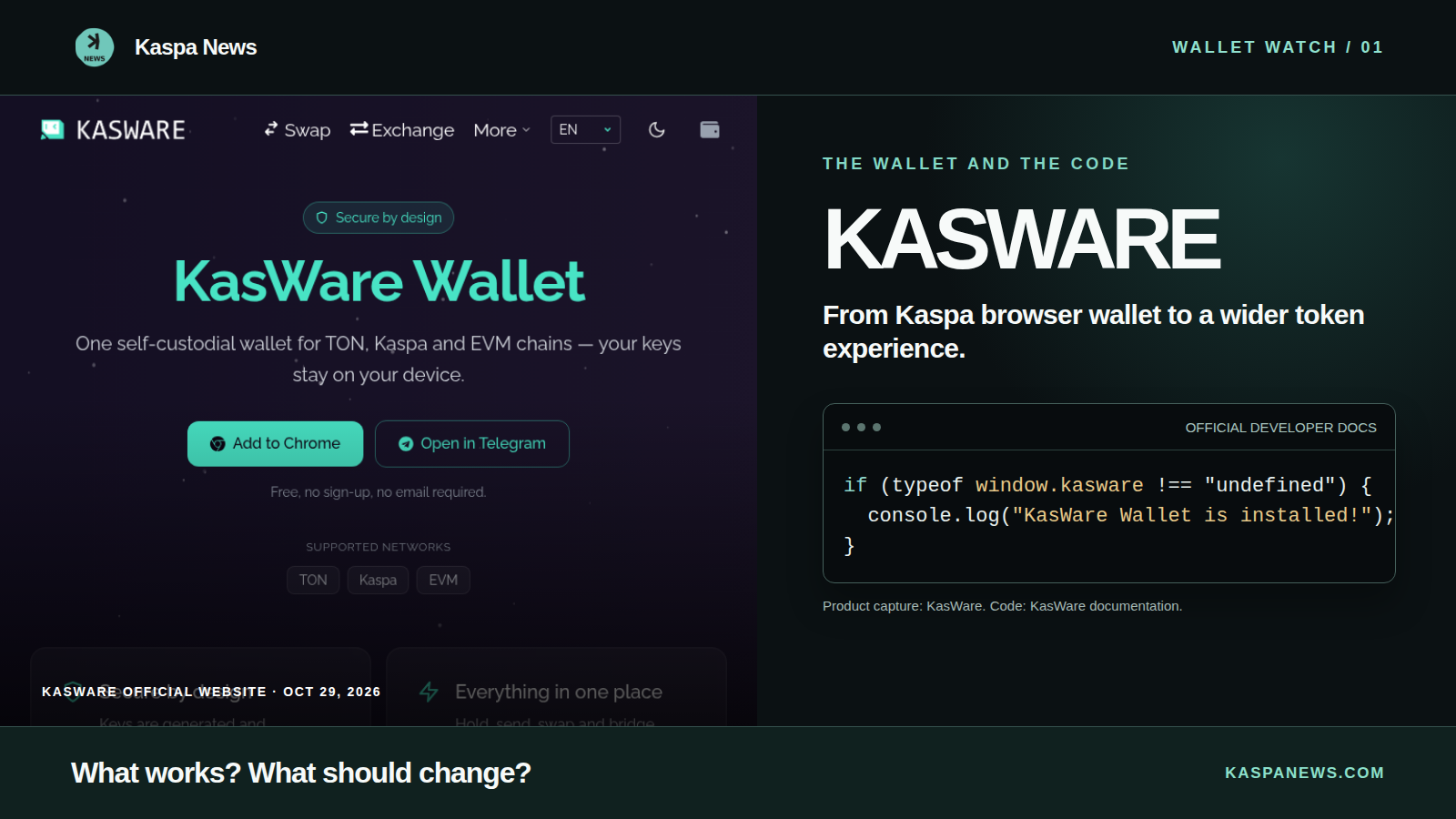
A wallet can determine whether a token is useful to anyone outside its development team. KasWare entered the Kaspa ecosystem as an open-source browser extension. Today its Chrome Web Store listing advertises support for KRC-20 tokens, Kaspa names, KRC-721 assets and L2 networks. On October 29, the store listed version 0.11.0, updated October 20. These are the developer's published claims, not results of our own transaction testing.
KasWare's current documentation describes a self-custodial wallet for Kaspa, TON and EVM networks. It points users to a Chrome extension, an Android app distributed through the project's GitHub releases, and a Telegram Mini App. The project says private keys are encrypted on the user's device. We have not audited that claim. For anyone trying the product, the official links in its documentation and the Chrome listing offered by kasware.xyz are the starting points to check before installing anything.
The token distinction matters. KRC-20 and KCC-20 are different systems. KasWare's store description explicitly names KRC-20. Its developer documentation also lists KCC-20 signing methods, while the Android v0.5.1 release note specifically names KRON KCC20 support. Those records do not establish that every KCC-20 token works in the current Chrome extension, or that its Android and browser versions support the same transactions. We will seek a version-specific answer from the KasWare team before saying more. The KCC-20 specification describes the newer covenant-token convention; it does not certify any wallet integration.
For builders, KasWare exposes a documented browser interface. The project's Kaspa integration guide shows how a site can detect window.kasware and request account access. It tells developers to request a connection only after the user acts, such as pressing a button. Its public repository provides source code for a browser extension, though a public repository by itself is not a security audit of a release.
We want this series to answer the questions users actually have. If you use KasWare, which version and platform are you on? Have KAS transfers, KRC-20 balances, wallet connections or KCC-20 transactions worked as you expected? Tell us what happened, including the version and a public transaction link if one is relevant. Never post a recovery phrase, private key or password. We will compare useful reports against project records and give KasWare a chance to respond to specific issues.
This is a product profile based on public documentation and listings. We have not installed the extension, completed a transaction or received a response from the team. There is no paid placement or partnership.